



LWIR Sensors
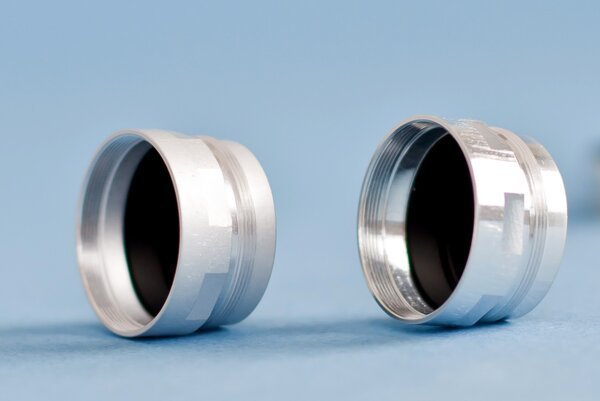
Long-Wave Infra-Red (LWIR) refers to multi and hyperspectral data collected in the 8-15 µm wavelength range. LWIR surveys are sometimes referred to as “thermal imaging” and can be used to identify relatively warm features such as hot springs, fumaroles and snow melt. LWIR sensors can also be used to map the distribution of certain minerals related to hydrothermal.
A wide variety of activities requires the sensing of electromagnetic radiation. Due to the atmosphere absorbed weakly in wavelength range, the utility of radiation sensors in the visible region is large and information is allowed to be obtained about distant objects. The close infrared and LWIR regions exhibit particularly low atmospheric absorption as well, therefore offering high potential for long-range observation sensors.
Detection of unilluminated objects at room temperature is allowed by sensing radiation in the LWIR, a pivotal capability to several specialized applications. For example, night vision is enabled by efficient detection of LWIR, and LWIR sensors are extremely valuable for many observation applications. Another critical parameter for many manufacturing applications is temperature. Due to their ability to sense temperature change over an area exceptionally quick and the fact they are non-contacting, infrared sensors are an advantage. The same characteristics are also used to detect defects like voids, since their thermal characteristics differ from those of the matrix. Additionally, LWIR detectors with right characteristics are valuable for chemical detection, because many molecular vibrations have characteristic resonant frequencies in this energy range.
A well-defined infrared sensor exists in the 8-14 µm spectral regions. Substantial investments in materials research for applications in LWIR sensors has been made.
Two significant factors in this type of application are cost, and the most important, performance. Another key issue for future development of widespread infrared sensing technology is the consideration of price/performance tradeoff. Civilian law enforcement and many more applications of LWIR are price sensitive. In the cases that ultra high performance is not needed, ease and reliability of processing and compatibility with conventional silicon electronics becomes important, because these factors strongly affect the cost.
To detect LWIR many strategies can be used. The simplest and least expensive are bolometric approaches, in which incident radiation heats detector element causing measurable quantity to change (e.g., resistance or capacitance). Bolometers are useful for certain applications, including those in which an intergrating detector is needed, since they can operate at room temperature. A low-cost night vision camera is available, based on 240 by 336 individual microbolometers fabricated on a micromachined silicon chip. Fundamental performance limitations of bolometric detection are the result of bolometers’ reliance on a second-order effect; for instance, high sensitivity usually imposing slow response. Photo-detectors (which directly convert individual photons into an electrical voltage or current), are the superior choice for applications requiring high sensitivity.
LWIR PHOTODETECTORS
Theoretically maximal performance (i.e., background-limited) with a fast response time can be achieved by the solid-state devices known as photodetectors. These are used for many applications because of their potentially excellent:
- Geometrical registration and stability;
- Signal-to-noise ratio and dynamic range;
- Optical, electrical and mechanical robustness; and
- Compactness and compatibility with solid-state circuitry.
Semiconductor materials produces most LWIR detectors of interest. The absorption of a photon and excitement of a carrier from the filled valence band into the conduction band causes detection. Radiation energy close to the bandgap is absorbed by direct bandgap materials better than indirect gap materials.
Unless the wavelength of the absorbed light is short enough to bring sufficient energy for the photons to excite carriers across the band gap, no semiconductor material can absorb radiation efficiently. Therefore, tuning the band gap to be small enough for the wavelength of interest for efficient absorption is an important issue in developing materials suitable for infrared sensing at long wavelengths. LWIR sensors must detect objects whose temperature approaches ambient (about 300 K). The search for improved infrared sensor materials involves finding materials with bandgaps less than 130 meV, since a temperature of 15 ¹C corresponds to radiation wavelength of 10 µm. To make efficient LWIR detectors, no binary alloy with a bandgap in the 130 meV range is needed.
As the wavelength of interest increases, materials challenges involved in making high-efficiency sensors increases. Different strategies were used to obtain a material with the “right” bandgap, given that no binary material is suitable for use as an LWIR detector material. Discussed below are three such materials strategies for obtaining high-efficiency infrared detectors: MCT (mercury-cadmium-telluride), III-V multiple-quantum-well devices, and III-V strained-layer superlattices. Man-made artificially structured crystals are involved in the last two strategies, and their manufacture requires atomic-scale control of the growth process.
The sensors require appropriate characteristics. Unbiased comparisons of performance between different infrared sensors technologies are particularly important for several of these:
- Sensitivity- as measure by specific detectivity;
- Resolution- or noise-equivalent temperature (i.e., the smallest temperature difference that can be resolved);
- Range- or spectral response (i.e., how the detectivity depends on wavelength);
- Response time;
- Thermal constraint- in terms of operating temperature.
Do you have a question? Our experts will be happy to hear from you and advise you on the best product for you. Contact Us.